How Much Smaller Can SMPS Magnetics Get? The Drivers of Power Density
Published by West Coast Magnetics, July 2026, based on our 2014 presentation on magnetics power density by CEO Weyman Lundquist (available for download below); content reviewed and confirmed current as of publication.
The power density of an SMPS transformer or inductor, its power handling per unit volume at a given temperature rise, is set by four levers: how efficiently the design uses its volume, how low the core loss is, how high the switching frequency runs, and how well the winding handles high-frequency loss. Better use of volume alone can raise power density by about 47%, and combining it with a lower-loss core roughly doubles it at 100 kHz. Raising the switching frequency shrinks the magnetics further, until winding loss and ferrite core-material limits stall the gains near 1 to 1.5 MHz.
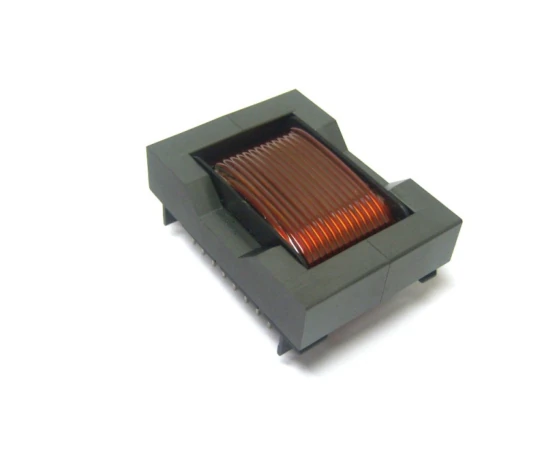
Power density here is a device’s power-handling capability divided by its total volume, holding temperature rise constant. Making a magnetic component smaller at the same power and temperature rise means raising its power density, which comes down to reducing loss (core and winding) and using the available volume more effectively.
Where the Losses Come From
A transformer’s loss is the sum of core loss and winding loss, and that total loss, against the allowable temperature rise, is what sets the minimum size. The losses at a well-designed operating point are smaller than most people expect. A typical 1500 W transformer at 250 kHz dissipates roughly 4 W in the core and 3 W in the winding, about 7 W total, for an efficiency near 99.5%. The design problem is not that magnetics are inefficient; it is packing that performance into the smallest, coolest-running volume.
Packaging: Using the Volume You Have
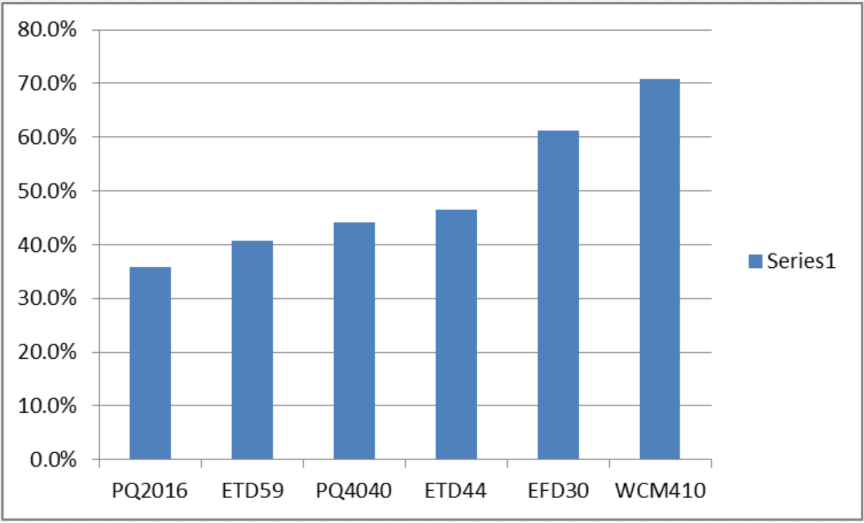
The first lever is packaging, meaning how much of the device’s total volume actually does work. In a typical design, the core and winding occupy well under the full device cube; the rest is insulation, clearance, and unused space. Improving the effective use of volume within the same core and winding technology, for an ETD49-class design, yields about a 47% improvement in power density on its own. With better insulating materials and tighter use of existing materials, usable volume fractions of 80% or higher are achievable. This is power density gained without changing the core material or the frequency at all.
Core Material: A Long, Steady Decline in Loss
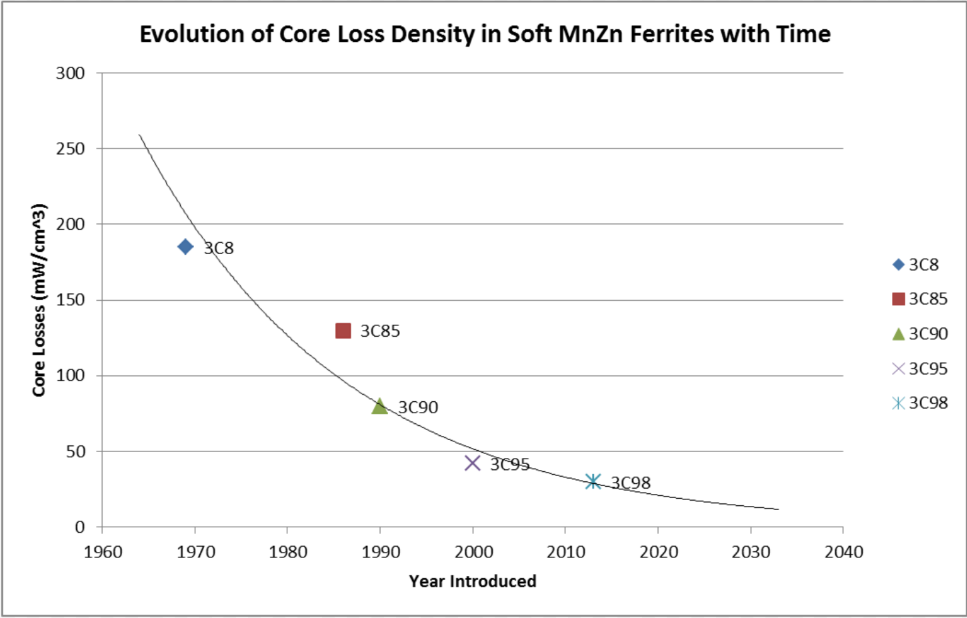
The second lever is core loss. Ferrite core loss has fallen steadily for decades: an average of about 4.7% per year from 1969 to the introduction of the 3C98 material in 2013 (per Ferroxcube data at 1 kilogauss, 100 kHz). In practice, choosing a current low-loss core material over the older grades that are still commonly stocked is worth roughly a 50% reduction in core loss. Combining more effective packaging with a lower-loss core roughly doubles power density at 100 kHz. The governing relationship is straightforward: core loss scales with the product of core area and turns against flux density and frequency, so the goal is to decrease the core-area-times-turns product, or increase the flux-density-times-frequency product, without raising core-loss density.
Switching Frequency: Shrinking Until It Stops
The third lever is switching frequency. Raising it lets the core store less energy per cycle, so the core shrinks, which is why higher-frequency converters use smaller magnetics.
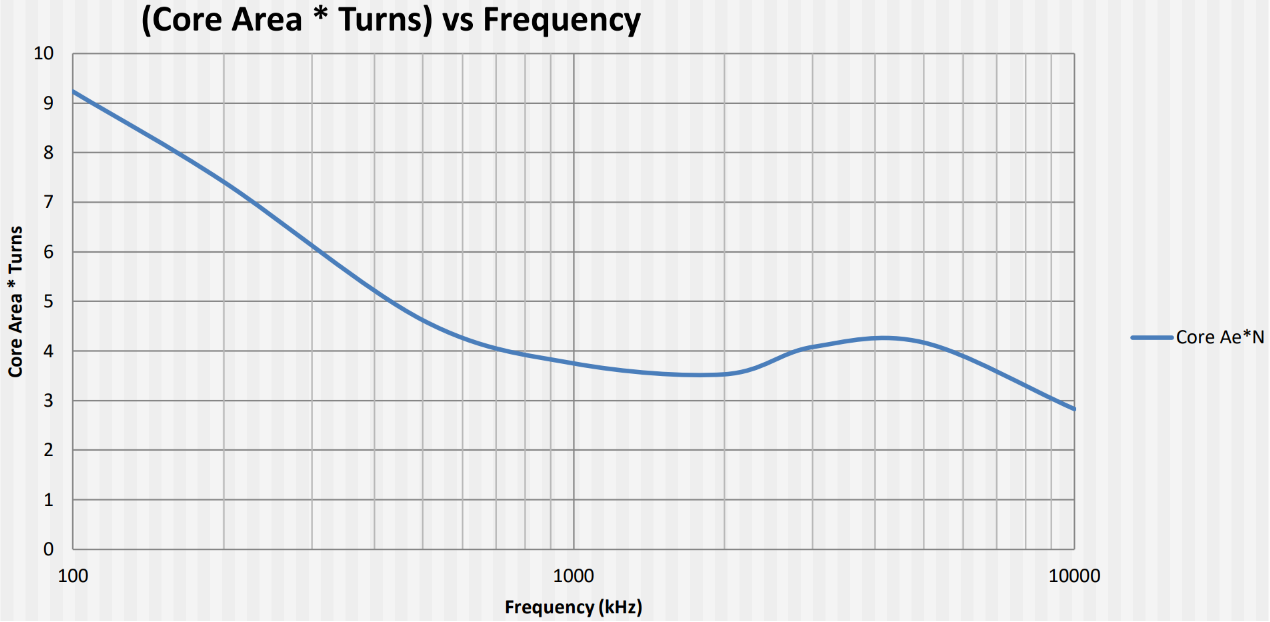
The gain is not unlimited. As the chart shows, device size falls steeply from 100 kHz but flattens out approaching the megahertz range, because two things run out at once. Litz wire manages high-frequency winding loss well up to about 1 MHz without a DC-resistance penalty, but above roughly 1 MHz it is insufficient and new winding approaches are needed. And current ferrite core technology stops delivering a size benefit above about 1.5 MHz. Past that point, shrinking the part further depends on new core materials and new winding technology, not just a higher clock. For the winding-loss physics behind that ceiling, see reducing winding losses in high-frequency inductors and litz wire design.
The Roadmap, and Where WCM Fits
In a 2014 conference analysis, WCM president Weyman Lundquist projected how far these levers could go. The near-term conclusion was that many designs could double their power density with material options already available. Looking a decade out, he projected average device volume roughly halving through better core materials and higher switching frequencies, and over a 20-year horizon, device sizes reaching 20% to 30% of their 2014 volumes, contingent on operating frequencies climbing toward the megahertz range. The explicit caveat: above about 1.5 MHz, that progress depends on new core materials and new winding technology being developed.
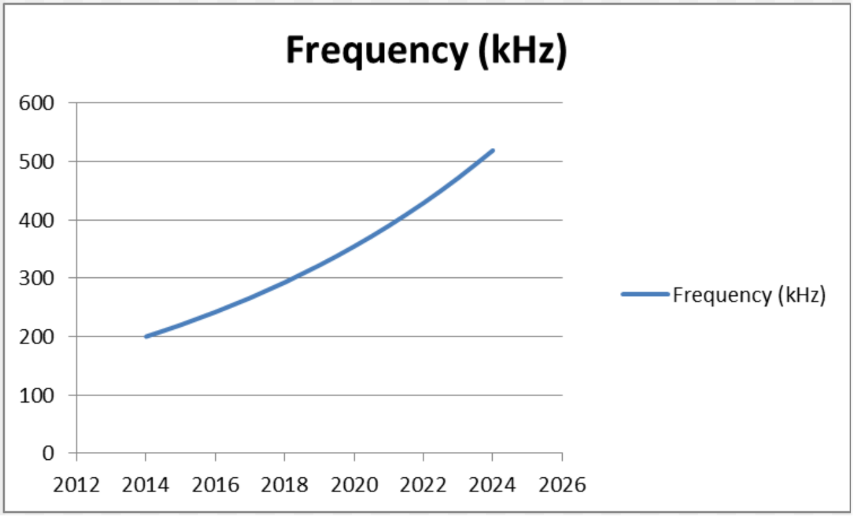
A decade on, that projection has largely held, and the mechanism behind it turned out to be wide-bandgap semiconductors. Gallium-nitride (GaN) and silicon-carbide (SiC) switches, now mainstream in power supplies, operate efficiently at hundreds of kilohertz to several megahertz, exactly the frequency climb the analysis anticipated, and they let designers shrink the magnetics to match. Industry reporting through 2025 puts GaN-based designs at up to roughly 50% smaller than comparable silicon designs at similar power, in line with the forecast’s projected device-volume reduction, and GaN has moved from niche to default in the most size-constrained products, from compact fast chargers to data-center and AI server power supplies. The ceiling the analysis flagged still holds as well: conventional ferrite and litz wire run out somewhere around 1 to 1.5 MHz, so the highest-frequency, highest-density designs are exactly where new winding technology has to take over.
That winding-technology gap is where WCM’s own work sits. Its shaped-foil winding is one of the “beyond litz” approaches for high-frequency, high-ripple operation, giving single-layer behavior with low AC and DC resistance where plain litz and foil fall short. The design tradeoffs behind pushing magnetics smaller are covered in high-power magnetics design, and WCM’s full design, build, and test capabilities are in the capabilities overview.
When standard components don’t fit your needs, our teams will engineer a solution.
FAQ
Power density, the power handled per unit volume at a given temperature rise, is set by four levers: how effectively the design uses its available volume (packaging), how low the core loss is, how high the switching frequency runs, and how well the winding controls high-frequency loss. Total loss against the allowable temperature rise sets the minimum size, so reducing loss and using volume more effectively is what makes a part smaller at the same power.
Using the device volume more effectively, within the same core and winding technology, can improve power density by about 47% for an ETD49-class design. This gain comes from better insulating materials and tighter use of existing materials, raising the fraction of the device volume that actually does work toward 80% or higher, with no change to core material or frequency.
Ferrite core loss has declined by an average of about 4.7% per year from 1969 to the introduction of the 3C98 material in 2013, measured at 1 kilogauss and 100 kHz. Choosing a current low-loss core material over the older grades still commonly stocked is worth roughly a 50% reduction in core loss. Combined with more effective packaging, a lower-loss core roughly doubles power density at 100 kHz.
Higher switching frequency lets the core store less energy per cycle, so the core shrinks, but the benefit flattens out approaching the low-megahertz range. Litz wire controls high-frequency winding loss well only up to about 1 MHz, and current ferrite core technology stops delivering a size benefit above about 1.5 MHz. Beyond that, further size reduction depends on new winding technology and new core materials rather than a higher frequency alone.
Yes, but the remaining gains depend on technology beyond conventional litz wire and current ferrites. Packaging, core-material, and frequency improvements can roughly double power density with options available today, and continued progress toward much smaller devices depends on new winding approaches, such as shaped-foil windings for operation beyond litz, and new core materials for operation above about 1.5 MHz.
 SMPS Magnetics Power Density: What Drives It
 Contact Us